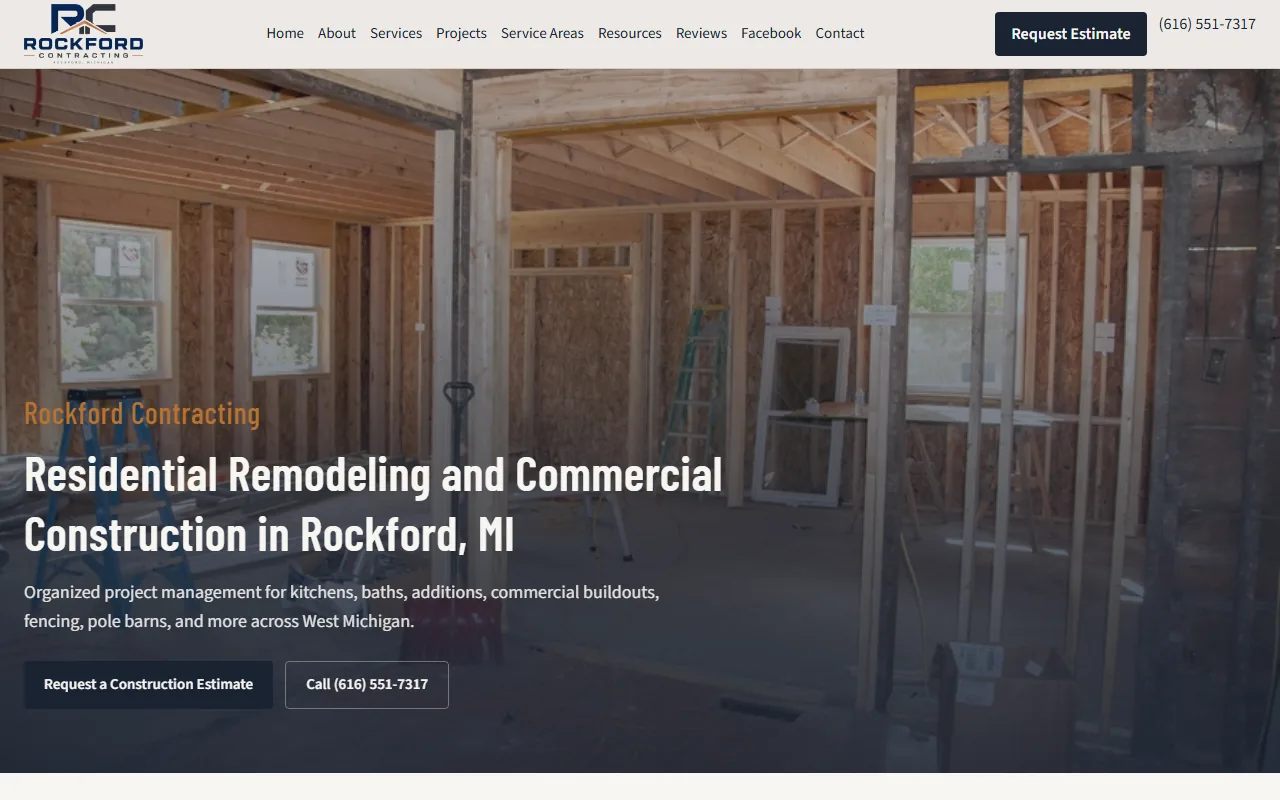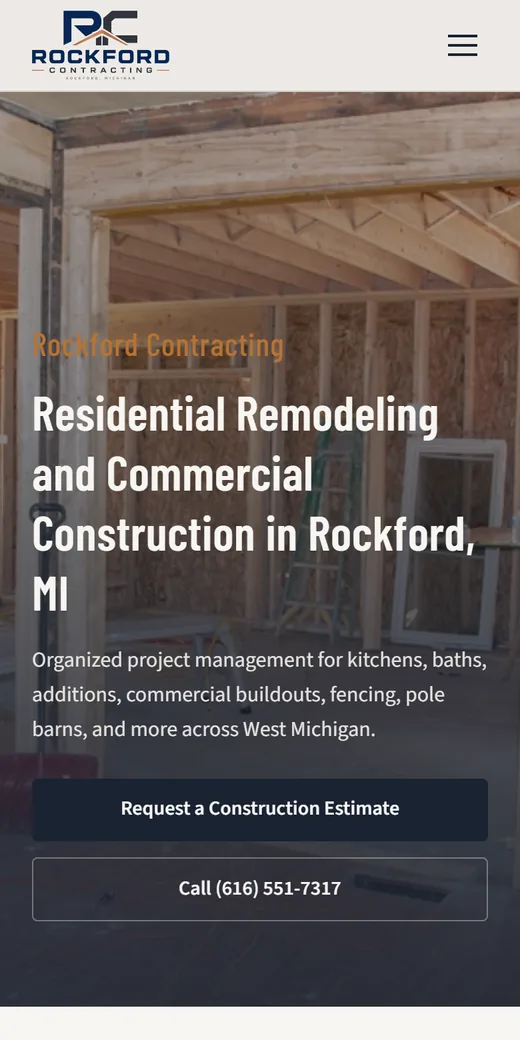
A contractor’s website has one job: turn a person with a problem into a phone call or a quote request. The people searching are often on a phone, in a hurry, with a hole in the wall or a tree on the garage. They will not dig. If the first screen does not say who you are, what you do, where, and how to reach you, they go back and call the next result.
Where the calls come from
For most trades, calls come from three places:
- The map results. Searches like “drywall repair near me” show a map with three businesses. Your Google Business Profile, reviews and website together decide whether you are one of them.
- Service plus town searches. “Excavation contractor in Charleston” or “tree removal in Rockford” bring up regular results, where a dedicated service page wins.
- People checking you out. Referrals and yard-sign leads look you up before calling. The site has to look like a real, established business.
The website feeds all three.
What we build
- The business name and service on the first screen, with a tap-to-call button and a quote form, on every phone size.
- A page for each service you want more of, each with 600 to 1,200 words that are actually about that service: what is included, what it costs or what drives the cost, how the job goes, photos, and three or more real questions answered.
- Service area pages only for towns you serve, each with content that is true only for that town. Our guide to service area pages for contractors explains how to do this without getting flagged as a doorway page.
- Your real job photos, resized for speed, with plain alt text.
- Reviews shown honestly: your real rating and count, linked to the source.
- Licenses, insurance and years in business, shown only when they are real and current.
- A quote form that reaches a person. We send a test through it and confirm it landed in your inbox.
- A contact page with everything: phone, email, hours, the area you cover, and what happens after someone sends the form.
- Fast on phones, checked at nine screen sizes, with a menu that opens every page.
Our contractor website checklist lists every item with the reason behind it.
Local search, done honestly
Local search runs on consistency and proof. The business name, address and phone must read the same on the website, the Google Business Profile, Facebook and directories like Bing Places, Apple Business Connect, BBB and Yelp. We set up structured data that tells search engines your business type, the services you offer and the areas you serve. We give you a review-request link to send after each job. And we never invent reviews, service areas or credentials.
The Google Business Profile is the biggest single lever for local calls. We prepare it completely, from categories and services to photos and the website link, and walk you through the sign-in and verification only you can do.
Trades we know
We build websites for excavation contractors, drywall contractors, painters, tree services, trucking and hauling companies, remodelers and general contractors, roofers, landscapers, concrete and masonry contractors, plumbers, electricians and HVAC companies. The pages differ, but the job is the same: show the work, answer the questions, make calling easy.
After launch
A contractor site needs a little attention to keep ranking: new photos from recent jobs, a new service page when you add a service, answers to questions customers keep asking, and a check that the quote form still delivers. Many contractors keep us on for managed hosting and SEO so that happens without them thinking about it.
If you need a logo cleaned up first, we do that too: see logos and email signatures. And our cost guide explains what makes a contractor site project bigger or smaller.