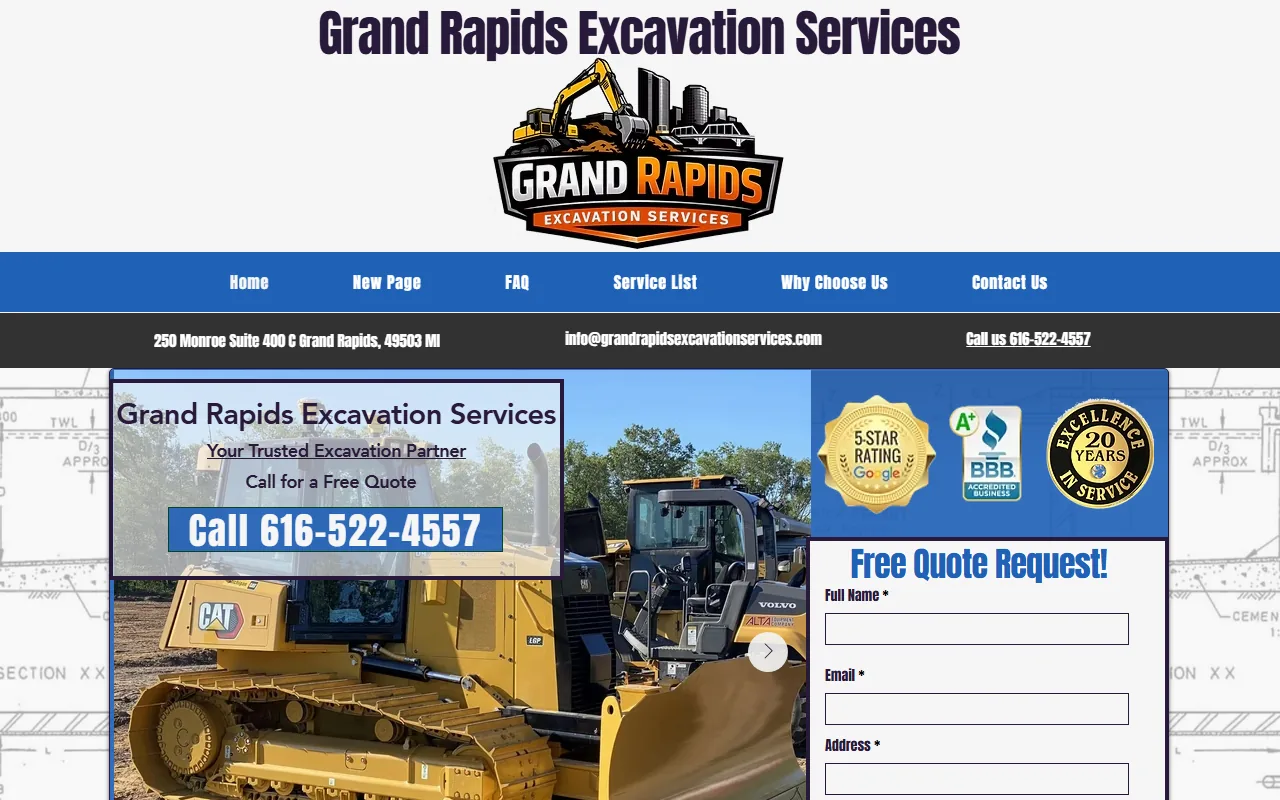
Excavation customers rarely find you in a panic. They are building a house on a wooded lot, adding a pole barn, replacing a failed septic field, or they are a builder lining up site work for spring. They plan weeks or months out, and before they call they want to know three things: that you do this kind of job, that you have the machines for it and that you work where their property is. Plenty of excavation work still comes from word of mouth and builders you have worked with for years, but the first thing a new customer does with your name is look you up. And a landowner with raw acreage and a house plan starts searching long before anyone gives them a name.
Where excavation websites usually come up short
- A picture of an excavator and a list of words. “Excavating, grading, trucking, septic, demolition” tells nobody what those jobs involve or what size projects you take.
- No equipment shown. Builders and developers want to know whether you run mini excavators for tight lots or dozers and large machines for site prep. A list with photos answers that before the call.
- Residential and commercial blended together. A homeowner asking about a basement dig and a general contractor looking for a site work sub need different information, and neither wants to hunt for it.
- Nothing about permits and timing. Customers do not know about soil erosion permits, septic approvals from the county health department, utility locates or the seasonal weight limits some northern states put on roads. Explaining how you handle them shows you have done it many times.
- “And surrounding areas” as the service area. Excavation work is limited by how far it makes sense to haul your machines. A landowner needs to know whether their parcel is inside that range.
- Old photos, or none. Real job photos, from a cleared lot to a finished grade, are the strongest proof an excavator has.
What we build for excavation contractors
- A page for each kind of work: basement and foundation digs, septic installs and repairs, land clearing, grading and drainage, water and utility line trenching, driveways, ponds, demolition and site prep. Each explains the steps, the equipment used and what affects the cost.
- An equipment page with photos of your actual machines, so builders and owners can see what you bring to a job.
- A page for builders and general contractors if you work as a sub: the site work you take on, your insurance and how to get on your bid list.
- A permits and timing section in your words: who pulls which permit, how utility locates work, and how frost and wet seasons affect the schedule.
- Service area pages for the towns and counties you really work in, each with something true for that place, like the soil you usually hit there, the health department you deal with for septic, or the typical lot sizes.
- Your license, insurance and years in business, shown only when real.
- A quote form built for site work: property address or parcel number, job type, whether there are plans or a survey, and the target start date. We test it with a real message that must reach your inbox.
- Your job photos, from raw land to finished grade, resized for speed.
If you also haul aggregate or run dump trucks for others, that work may deserve its own section; our page on trucking and hauling websites covers how we handle it.
Getting found for site work
Excavation searches are more specific than people expect. Some examples:
- “excavation contractor near me”, or “excavating company” plus a county name
- “land clearing for house lot” or “forestry mulching”
- “basement excavation”, “septic installer” or “perc test”
- “driveway grading”, “drainage contractor” or “pond digging”
- “site work contractor”, typed by builders and developers
The map results still matter, so we prepare your Google Business Profile fully: the excavating contractor category, services, service area, photos and the website link. Google makes the owner sign in and verify, and we give you the steps. For excavators, though, the service pages often do more of the work, because the people searching “septic installer” or “land clearing” are planning a project and will read before they call.
Service area pages matter more than usual here, since excavation is tied to distance and to local rules. A county’s soil conditions or septic requirements are exactly the kind of true detail that makes a location page worth having. Our service area pages guide explains how to write them so they help rather than look copied.
Reviews show as your real rating, linked to the source. Our SEO and AI visibility service also makes your pages easy for AI assistants to read, since some landowners now ask one for a recommendation instead of searching. We never promise rankings; we make sure your site is a strong candidate for them.
How a project runs
We start with a call about the work you want more of. Some excavators want more residential basements and septic systems; others want steady sub work from builders. Then we ask for:
- Your services and the size of jobs you take
- The towns and counties you work in, and how far you will haul your machines
- Your equipment list
- License, insurance and the year you started
- Job photos and machine photos from your phone
- How you handle permits, locates and seasonal timing
You get a written proposal that shows one-time and monthly costs as separate items. We build the site, check each page at nine screen sizes and test the quote form. After it goes live, managed hosting with a daily check keeps it running and only flags real problems. For our general approach to trade websites, see contractor websites. The contractor website checklist and the cost guide are good next reads, or get in touch with a few details about your work.